Tips
A Pipe Just Burst: What to Do in the First Ten Minutes
- Tips
- emergencies
- leaks
- burst pipes
Water spraying in the basement? Shut it off at the main, stay clear of electricity, and call. Here's the order that limits the damage, what to tell us when you call, and what to do while you wait.
Pete
3 min read
On this page
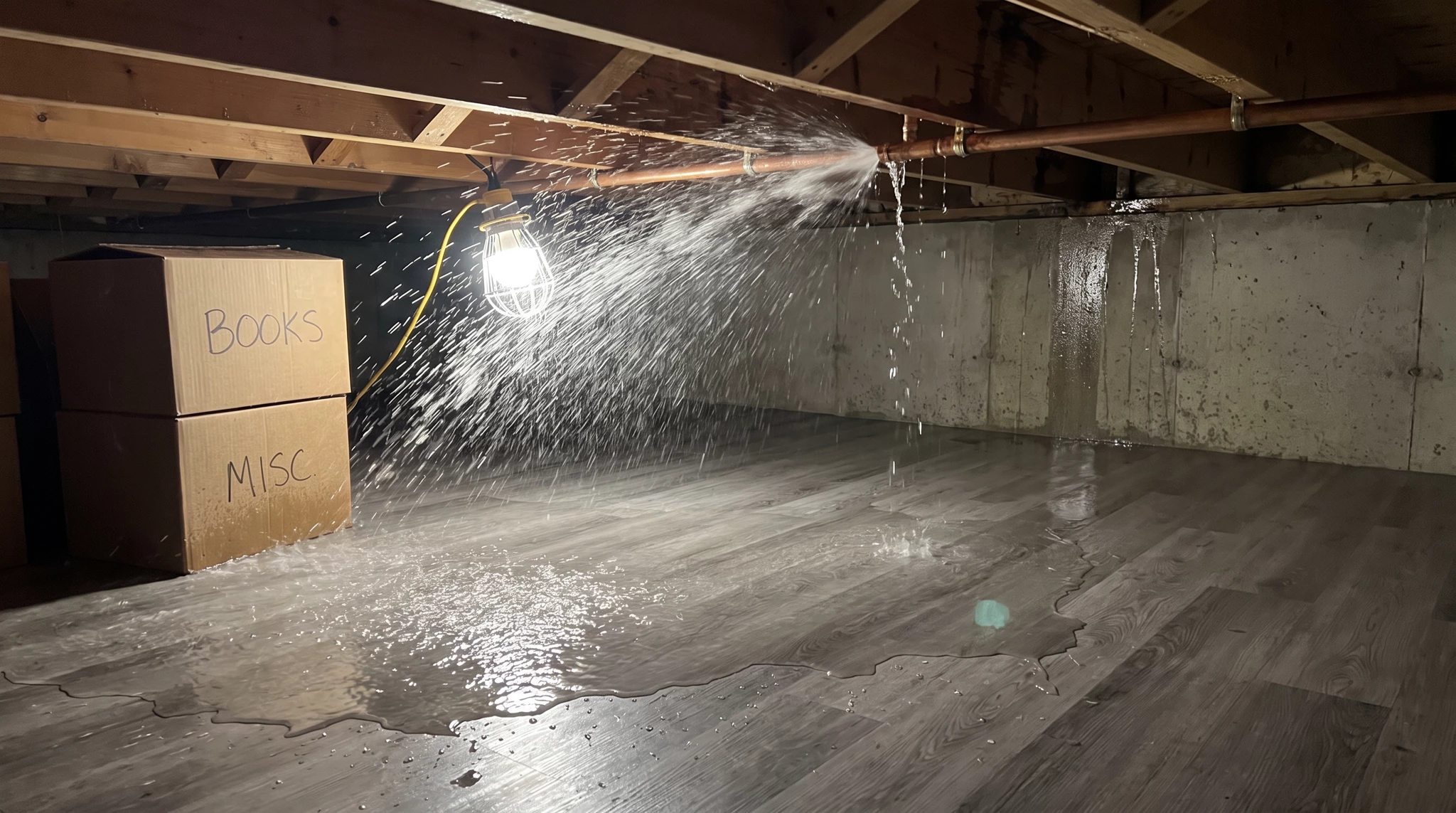
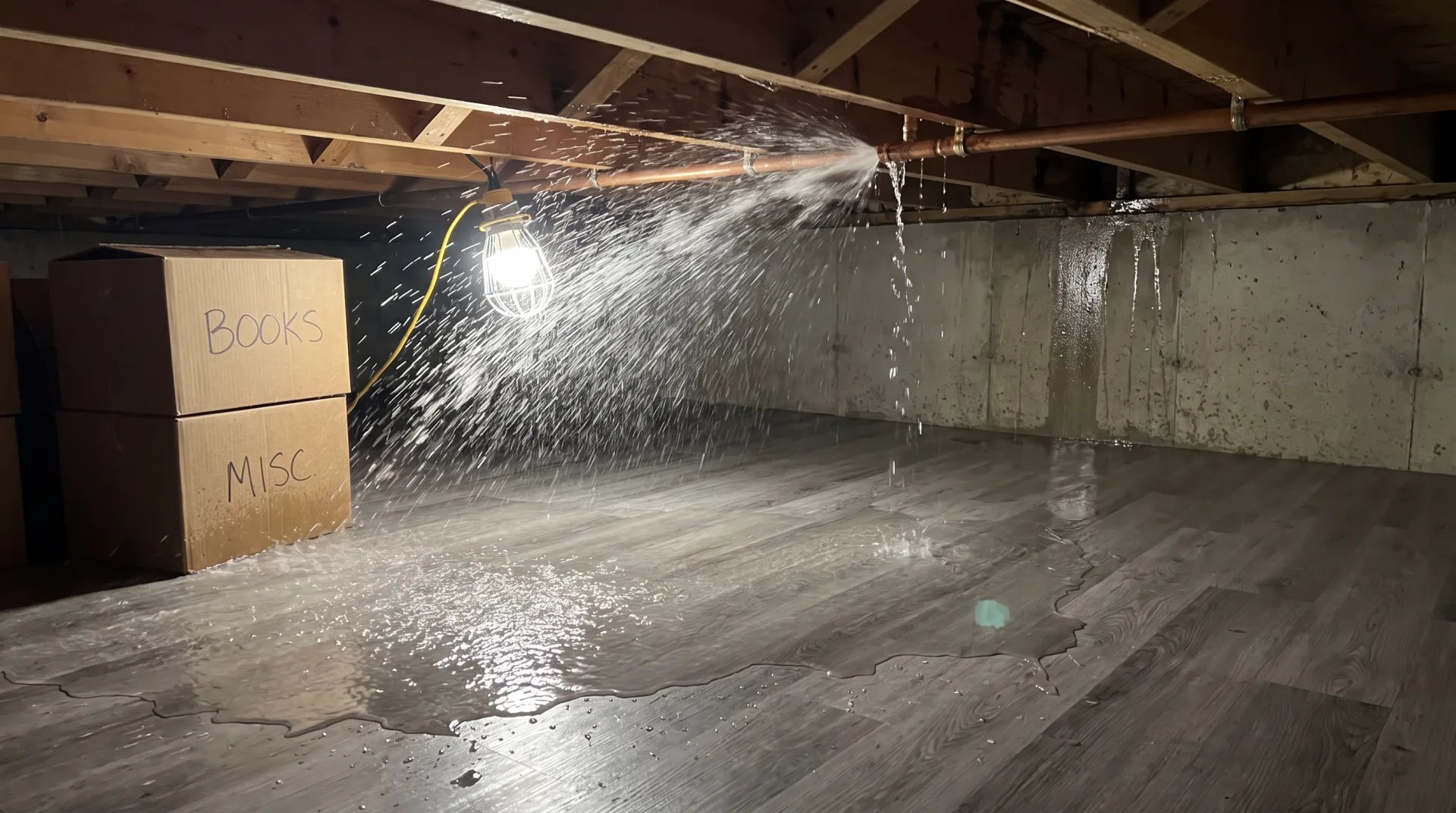
A burst pipe can put a lot of water on the floor fast. A half-inch line can push out several gallons a minute, and every minute it runs means more drywall, flooring and belongings to dry out or replace. What you do in the first few minutes decides how much damage it does. Here's the order that matters.
Do this today, not during the emergency
Know where your main shut-off is.
Find it, make sure it turns, and show everyone in the house.
1. Shut off the water at the main
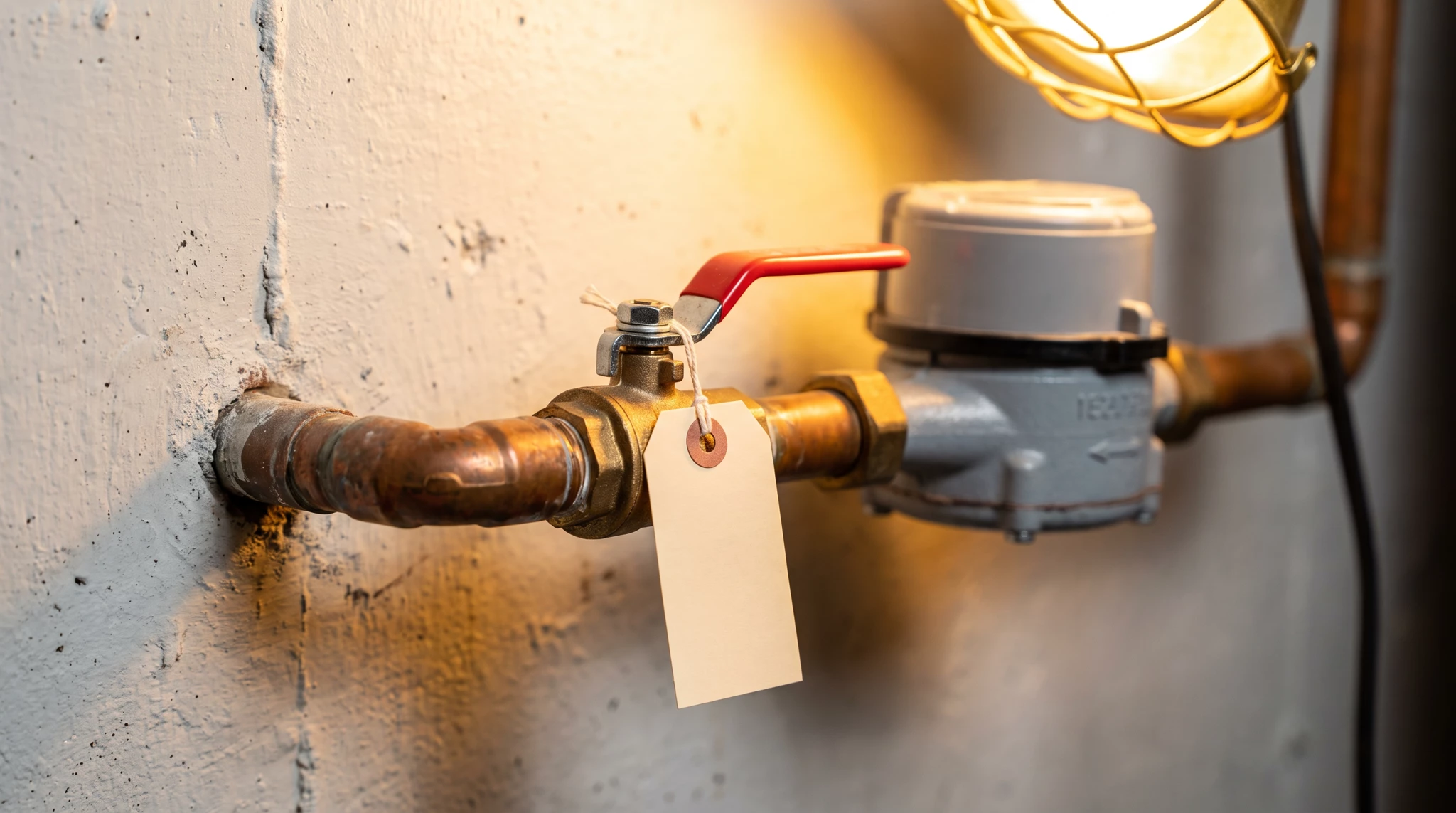
Your main shut-off is usually where the water line comes through the foundation, most often in the basement on the wall facing the street, or near the water meter or the well pressure tank. Turn a round handle clockwise until it stops; turn a lever handle a quarter turn so it sits across the pipe. If you're on a well and can't find a valve, switch off the well pump at the electrical panel.
2. Stay clear of electricity
If water is near outlets, appliances, a furnace or the electrical panel, don't walk through it. Turn off power to that area at the panel only if you can reach the panel from a dry spot. If you can't, keep everyone out of the wet area and tell us when you call.
3. Open faucets and turn off the water heater
Open a cold faucet on the lowest floor to drain the water still in the pipes, then open faucets upstairs to let air in. If the burst is on a hot water line, or the house will be without water for a while, turn the water heater off (or to pilot on gas) so it doesn't heat an empty tank.
4. Start moving and drying
- Move boxes, rugs, electronics and furniture off the wet floor.
- Soak up what you can with towels, a mop or a wet vacuum.
- Put a bucket under any spot where water is dripping through a ceiling. If a ceiling is sagging, poke a small hole in the low spot to let the water out rather than letting it come down all at once.
- Open windows or run fans once the power is safe.
5. Take photos, then call
Take a few photos and a short video of the break and the wet areas for your insurance, before you clean up. Then call. Pete's Plumbing is open 24/7, all year, for plumbing emergencies in Concord and the surrounding towns. If water is still running and you can't shut it off, call first and we'll walk you through it on the phone.
| When you call, tell us | Why it helps |
|---|---|
| Your address and town | So we can send the closest tech |
| Whether the water is off | Tells us how urgent it is |
| Where the break is | So we bring the right parts |
| If water reached anything electrical | So we arrive ready to work safely |
| If you're on a well or town water | Changes how we shut things down |
After the repair
Wet drywall, insulation and carpet pad need to dry within a day or two to keep mold from starting. For anything more than a small puddle, call your insurance company early; they often send a water mitigation company with dehumidifiers and fans. We'll show you what failed and why, so you know whether it's a one-off or a sign other pipes need attention.
The calls that end well are the ones where somebody knew where the main was. Find yours this weekend.
Emergency? Call Pete's Plumbing any time at (762) 254-4897.
Need A Plumber In Concord?
Open 24/7 in Concord and the towns around it. Call or book a time.