Seasonal
Test Your Sump Pump Before the Fall Rains
- Seasonal
- sump pumps
- basements
- storms
A sump pump can sit quiet for months and then have one job on the stormiest night of the year. A five-minute test before the fall rains, and the checks that keep a basement dry when the power goes out.
Pete
3 min read
On this page
A sump pump can sit quiet in the corner of the basement for months, then have one job to do on the worst night of the year: a soaking nor'easter, a heavy fall rain on saturated ground, or the big spring thaw. If it doesn't kick on, the water table comes up through the floor. Testing it takes five minutes. Here's how.
How your sump system works
Drain pipe around the edge of your foundation collects groundwater and carries it to the pit, called the sump. When the water rises, a float lifts and switches the pump on. The pump pushes the water up a discharge pipe, through a one-way check valve, and out of the house. In a lot of Concord-area basements, especially in low spots near the Merrimack and its brooks, that cycle runs dozens of times a day in wet weather and not at all in a dry August.
The five-minute bucket test
- Make sure the pump is plugged in. If it's on a GFCI outlet, press the reset button.
- Lift the lid off the pit and look for debris, gravel or a float that's stuck against the side.
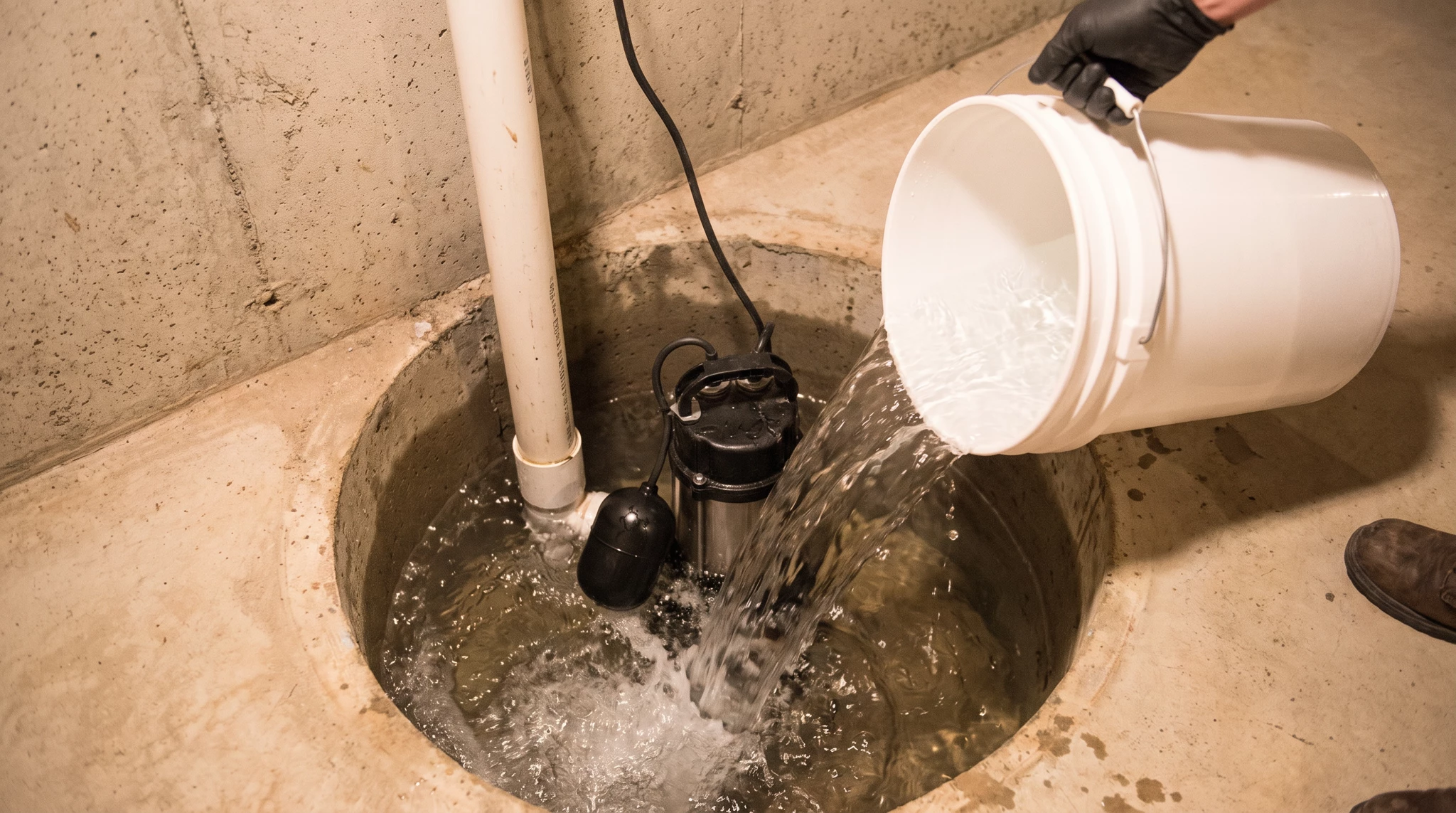
- Slowly pour a five-gallon bucket of water into the pit.
- Watch the float rise. The pump should start on its own, empty the pit quickly and shut off.
- Go outside and confirm water is coming out of the discharge pipe.
Then check these
- The discharge line outside is clear of leaves and ice, and drops the water well away from the foundation, not right back against it.
- The check valve above the pump stops water from falling back into the pit when the pump shuts off. A loud thunk is normal; water rushing back down is not.
- The pump isn't cycling on and off every minute or two in dry weather. That can mean a bad check valve or a high water table.
- The alarm, if you have one, sounds when you lift the float by hand.
When the power goes out
The storms that fill a sump pit are the same storms that take down power lines. A regular pump does nothing without electricity. If your basement takes on water every year, a backup is worth a look.
| Backup option | How it works | Good to know |
|---|---|---|
| Battery backup pump | A second pump runs off a deep-cycle battery when power fails | Batteries need replacing every few years |
| Water-powered backup | Uses town water pressure to pump the pit | Needs town water, not a well |
| Generator | Runs the main pump and more | Someone has to start it, unless it's a standby unit |
Before winter, one more thing
In January, the end of a discharge pipe that sits in a low spot can freeze solid, and a pump pushing against ice will burn itself out. Make sure the outside end drains downhill and isn't buried in a snowbank. If it froze last winter, we can re-route it or add a freeze-protection fitting that lets water escape even when the line is blocked.
Signs it's time to replace
- It's seven to ten years old
- It hums but doesn't move water, or runs constantly
- Rust, grinding noises or a burning smell
- The pit overflowed during the last storm
The pump that fails in a storm is almost always the one nobody has tested since it went in.
Pete's Plumbing installs and services sump pumps, battery backups and sewage ejector pumps across Concord and the surrounding towns, and we're open 24/7 if your basement is taking on water right now. Call (762) 254-4897.
Need A Plumber In Concord?
Open 24/7 in Concord and the towns around it. Call or book a time.