Repairs & installs
Hard Water in New Hampshire: What It Does to Your Plumbing
- Repairs & installs
- water quality
- well water
- filtration
White crust on faucets, orange stains in the toilet, a water heater that rumbles. In New Hampshire, especially on a private well, that's usually the water itself. What hard water and iron do to your plumbing, how to test, and what actually fixes it.
Pete
2 min read
On this page
If your faucets wear a white crust, your shower glass never looks clean, or your toilet bowl has an orange ring that comes back a week after you scrub it, the problem probably isn't your cleaning. It's your water. Around Concord and the towns nearby, plenty of homes deal with hard water, iron or sediment, and it's hard on plumbing in ways you can't see.
Why it's so common here
A large share of New Hampshire homes get their water from a private well. Water that has moved through bedrock and soil picks up minerals along the way: calcium and magnesium (hardness), iron and manganese (staining), and sometimes sediment. Town water is treated before it reaches you, but well water is whatever the ground gives it, and it can change over the years.
What it does to your plumbing
Scale
Hardness leaves rock-like deposits inside pipes, aerators, shower heads and valves, slowly choking the flow.
Shorter water heater life
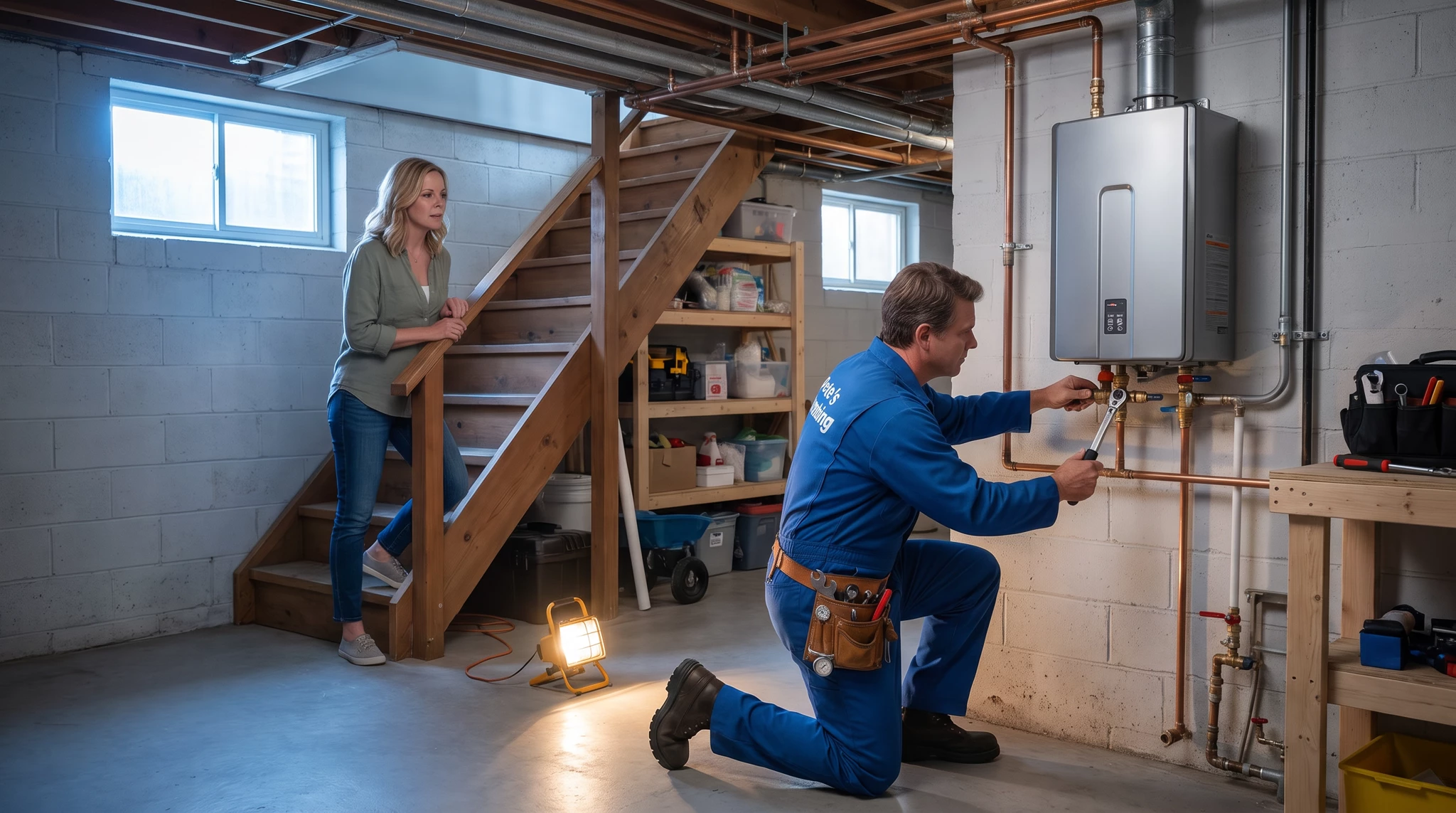
Scale piles up in the bottom of the tank or inside a tankless heat exchanger and makes it work harder.
Worn fixtures
Cartridges, fill valves and dishwasher parts wear out sooner, and stains set into porcelain and glass.
Test before you treat
The right fix depends entirely on what's in your water, and some things that matter most, like arsenic and radon, have no taste, color or smell. The New Hampshire Department of Environmental Services recommends that well owners have their water tested by an accredited lab every three to five years. Start there. If you're on town water, your water department publishes a yearly water quality report.

Which treatment fixes what
| Problem | What you notice | What usually fixes it |
|---|---|---|
| Hardness | White scale, spots, soap that won't lather | A water softener |
| Iron and manganese | Orange or black stains, metallic taste | An iron filter, or a softener for low levels |
| Sediment | Grit in aerators, cloudy water after rain | A whole-house sediment filter |
| Odor or taste | Rotten-egg smell, chlorine taste | Carbon filtration or an air-injection system |
| Bacteria | A failed lab test | Shock chlorination, then UV treatment |
| Arsenic | Nothing, only a lab test shows it | Point-of-use reverse osmosis or a whole-house system |
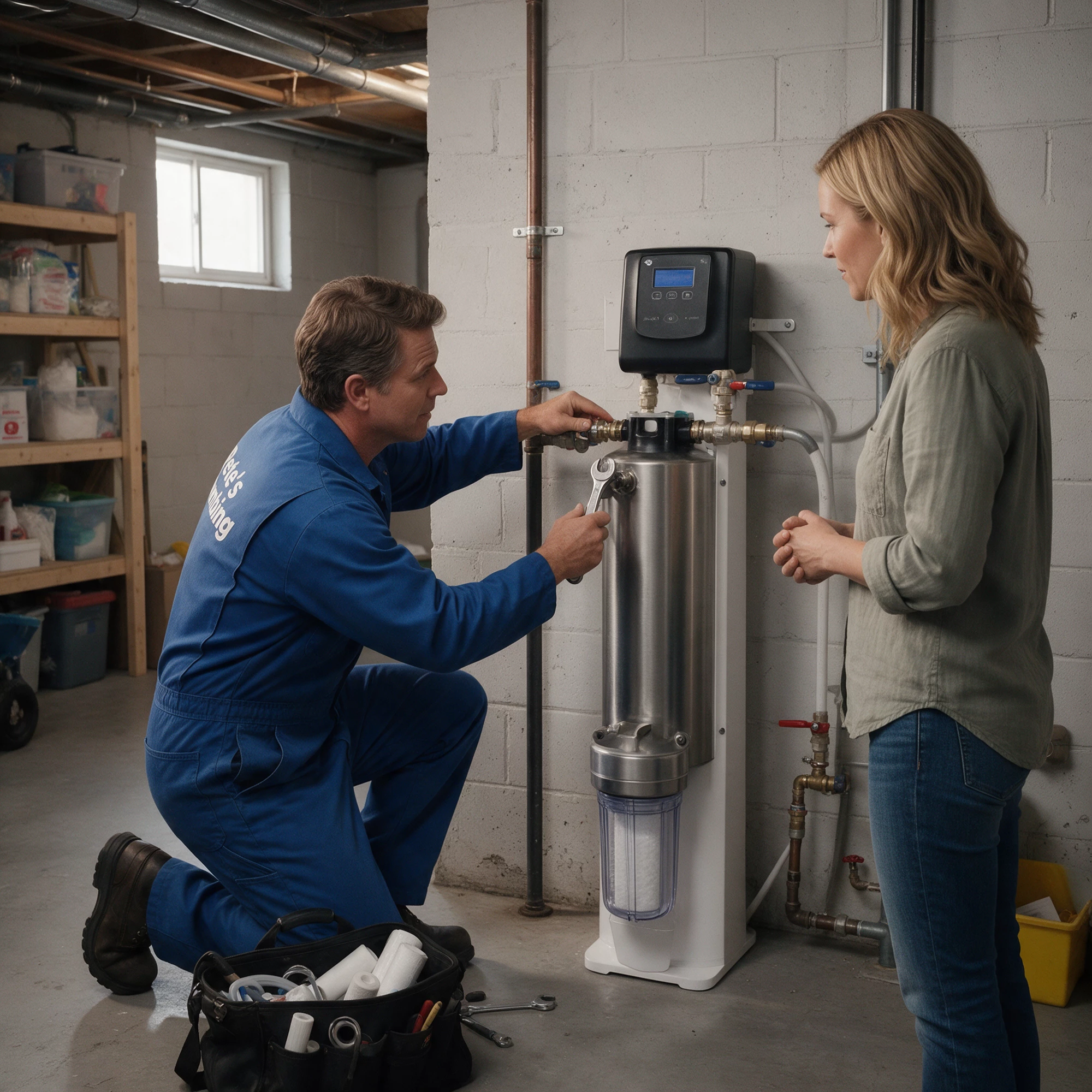
Living with a treatment system
- Softeners need salt added every month or two and a quick check that the brine tank isn't bridged with a crust of salt.
- Sediment and carbon cartridges get changed on a schedule, usually every few months.
- UV lamps are replaced once a year, even if they still glow.
- Retest the water after any new system goes in, and every few years after that.
The best water system is the one sized for your test results, not the biggest one on the truck.
Pete's Plumbing installs and services softeners and whole-home filtration across Concord, Bow, Hopkinton, Loudon and the towns around them. Call (762) 254-4897 to set up a visit, and bring your water test if you have one.
Need A Plumber In Concord?
Open 24/7 in Concord and the towns around it. Call or book a time.